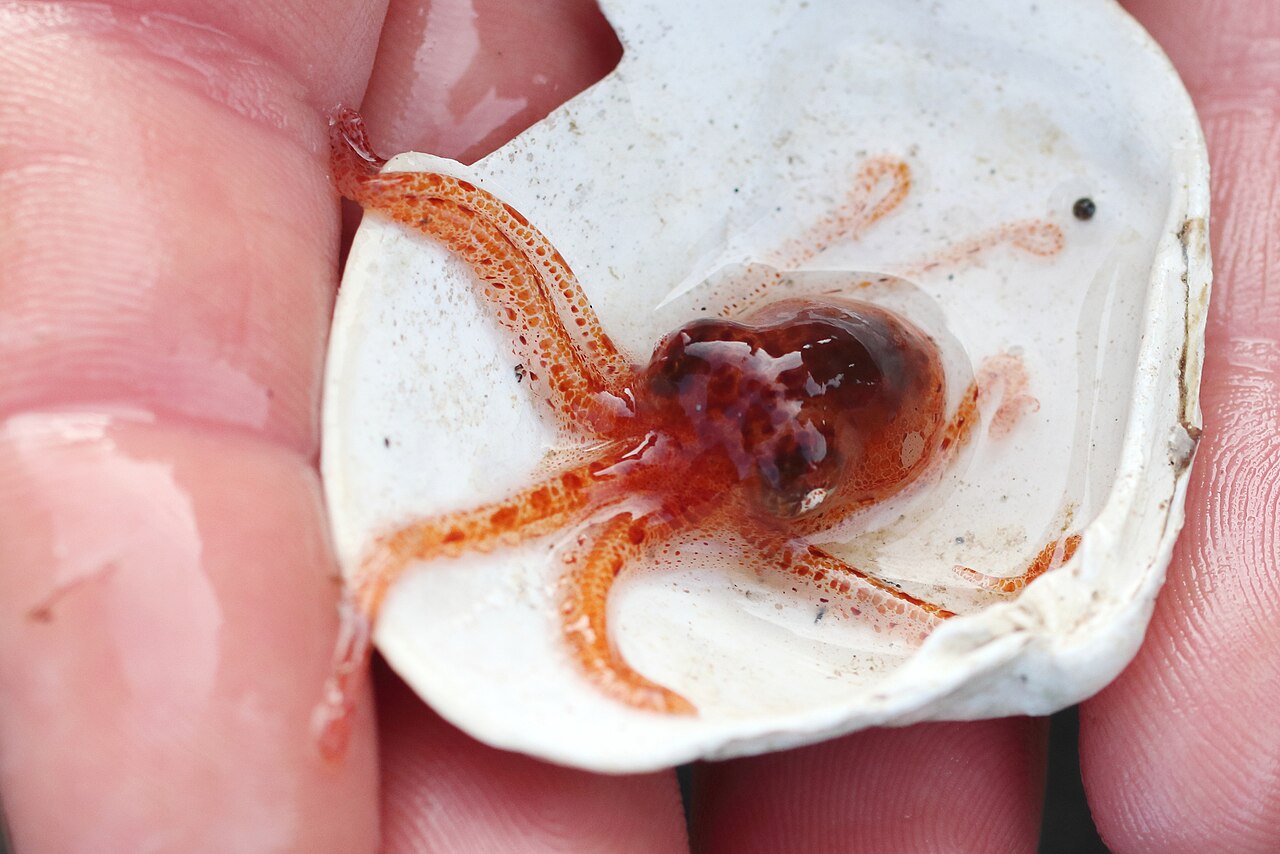
 Photo: Erin McKittrick · Image source ·CC BY 4.0
Animal profile · Mollusks · Cephalopods
Giant Pacific octopus
Enteroctopus dofleini
The giant Pacific octopus is the largest octopus species. It patrols cold northern seafloors with eight flexible arms, excellent vision, and a talent for disappearing in plain sight.
Not a fish · an aquatic neighborWater
Saltwater
Cold coastal water around rocky reefs, caves, kelp forests, pilings, and deeper seafloor dens.
Temperature
7–13°C · 45–55°F
A representative cool-water range; this species also travels across depths with different temperatures.
Size
Often up to 23 kg (50 lb) with a 4.5 m (15 ft) arm span
Its arms can stretch across a small room
Lifespan
Usually about 3–5 years
Life expectancy varies with place, conditions, and what scientists have been able to observe.
01 · Signature adaptation
What does it do?
This mostly solitary explorer feels and tastes with thousands of suckers. It can squeeze through surprisingly small openings, jet away, release ink, or blend into a rock when threatened.
02 · Home coordinates
Where does it live?
The northern Pacific rim, from Japan and Russia across Alaska and south along the west coast of North America.
Regions: Northern Pacific Ocean · Alaska · West Coast of North America · Japan
03 · The menu
What does it eat?
Strong arms and suckers seize prey, while a hard beak breaks into shells and flesh.
Carnivore: crabs, clams, abalone, fish, other octopuses.
04 · Remember this
Two wow facts
Tiny beginning
The world’s largest octopus hatches from an egg about the size of a grain of rice and begins life smaller than a fingernail.
Sources [1]
Skin under brain control
It can change color and texture quickly, helping it resemble rocks, sand, or shadow without carrying a shell.
Sources [2] [1]