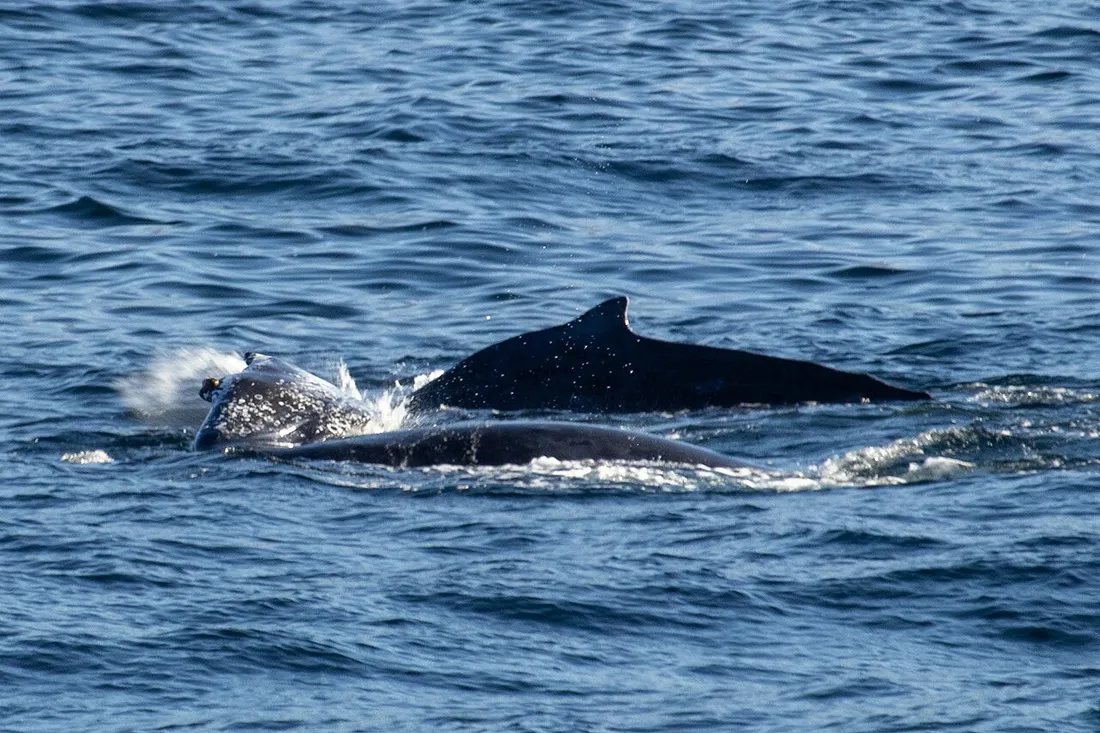
 Photo: Alicia Di Rado · Image source ·CC BY 4.0
Animal profile · Other aquatic life · baleen whale
Humpback whale
Megaptera novaeangliae
The humpback whale is a large baleen whale recognized by long flippers, knobby head structures, and powerful songs. It migrates between high-latitude feeding grounds and warmer breeding waters.
Not a fish · an aquatic neighborWater
Saltwater
Open ocean, coastal feeding grounds, polar waters, and tropical breeding areas.
Temperature
Range not established
A dependable species-specific wild temperature range was not established from the reviewed sources.
Size
About 12–16 m (39–52 ft) long; up to about 40 metric tons
A large adult can be as long as a city bus.
Lifespan
About 45–50 years or more
Life expectancy varies with place, conditions, and what scientists have been able to observe.
01 · Signature adaptation
What does it do?
It undertakes long seasonal migrations and often feeds cooperatively. Males produce complex songs, especially during breeding periods.
02 · Home coordinates
Where does it live?
Worldwide oceans, with separate populations in major ocean basins.
Regions: Atlantic Ocean · Pacific Ocean · Indian Ocean · Southern Ocean
03 · The menu
What does it eat?
It engulfs prey-rich water and strains food through baleen plates.
Filter-feeding carnivore: krill, small schooling fish.
04 · Remember this
Two wow facts
Long flippers
Its pectoral flippers are proportionally longer than those of other baleen whales.
Sources [2]
Bubble-net teamwork
Some populations cooperate by blowing bubbles that concentrate schooling fish before feeding.
Sources [1]