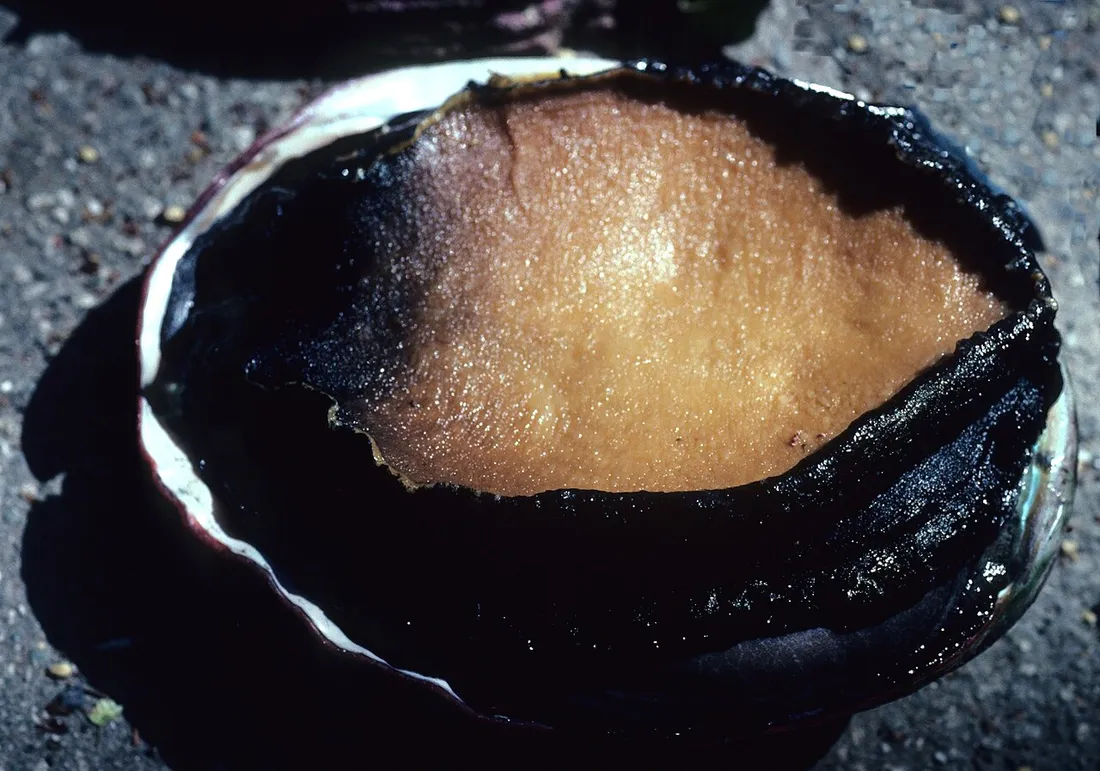
 Photo: Dr. Dwayne Meadows, NOAA/NMFS/OPR. · Image source ·Public domain
_-_Flickr_-_NOAA_Photo_Library.jpg)
Animal profile · Mollusks · Abalone
Red abalone
Haliotis rufescens
Red abalones are large sea snails found on rocky Pacific shores. Their broad shells protect a powerful muscular foot that grips rocks and gathers drifting kelp.
Not a fish · an aquatic neighborWater
Saltwater
Rocky intertidal and subtidal reefs, often near kelp forests.
Temperature
Range not established
A dependable species-specific wild temperature range was not found in the selected sources.
Size
Shell nearly 30 cm (12 in) across
About as wide as a dinner plate
Lifespan
Large individuals may be 15–20 years old or more.
Life expectancy varies with place, conditions, and what scientists have been able to observe.
01 · Signature adaptation
What does it do?
Red abalones cling to hard rock and move mainly while feeding. They are broadcast spawners, releasing eggs and sperm into the surrounding water.
02 · Home coordinates
Where does it live?
From Oregon through California to central Baja California.
Regions: Oregon · California · Baja California
03 · The menu
What does it eat?
It grips drifting kelp with its foot and scrapes food with a radula.
Herbivore: drift kelp, brown algae, red algae.
04 · Remember this
Two wow facts
Plate-sized shell
Red abalone is the largest abalone species on the Pacific Coast of North America.
Sources [1]
Kelp catcher
It can detect drifting kelp with its tentacles and fold its foot around the plant to hold it.
Sources [1]