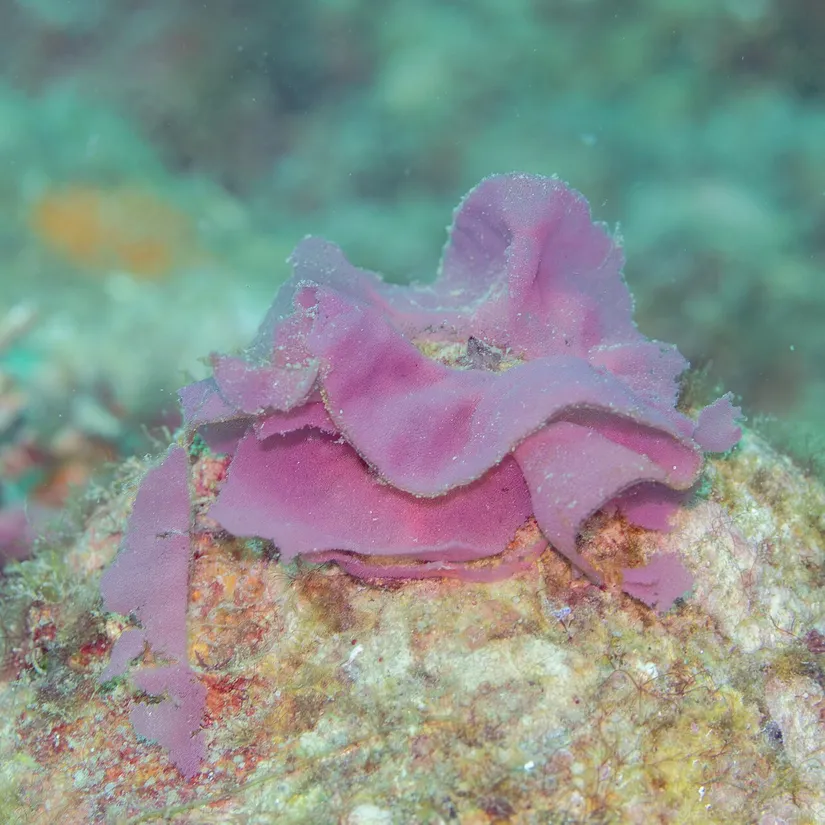
 Photo: Diego Delso · Image source ·CC BY-SA 4.0
,_Anilao,_Filipinas,_2023-08-24,_DD_60.jpg)
Animal profile · Mollusks · nudibranch
Spanish dancer
Hexabranchus sanguineus
The Spanish dancer is a large, bright-red nudibranch found on tropical reefs. When disturbed, it can wave its broad body edges like a dancer's skirt.
Not a fish · an aquatic neighborWater
Saltwater
Coral and rocky reefs, rubble, and nearby sandy areas.
Temperature
Range not established
A dependable species-specific wild temperature range was not found; values are left unreported.
Size
Commonly up to about 25 cm (10 in), with larger reports to about 40 cm (16 in)
About as long as a large dinner plate
Lifespan
Not established in the wild
Life expectancy varies with place, conditions, and what scientists have been able to observe.
01 · Signature adaptation
What does it do?
It is usually found alone or in pairs and often hides in reef crevices during daylight. Its bright color and sponge-derived chemicals may discourage predators.
02 · Home coordinates
Where does it live?
Tropical Indo-Pacific waters from East Africa and the Red Sea to Japan, Australia, and French Polynesia.
Regions: East Africa · Red Sea · Indian Ocean · Japan · Australia · French Polynesia
03 · The menu
What does it eat?
It feeds mainly on encrusting sponges and can obtain defensive chemicals from them.
carnivore: marine sponges.
04 · Remember this
Two wow facts
Flamenco escape
When threatened, it can fold and undulate its body edges to swim away from the seafloor.
Sources [1]
Chemical shield
Compounds from the sponges it eats can help defend the slug and its egg ribbons.
Sources [1]